
A certification mark alone doesn’t prove that a forged wheel was independently tested. Counterfeit wheels can carry convincing DOT or JWL markings, and those marks don’t guarantee third-party testing or approval. Knowing how to spot fake forged wheels online takes more than reading a stamp.
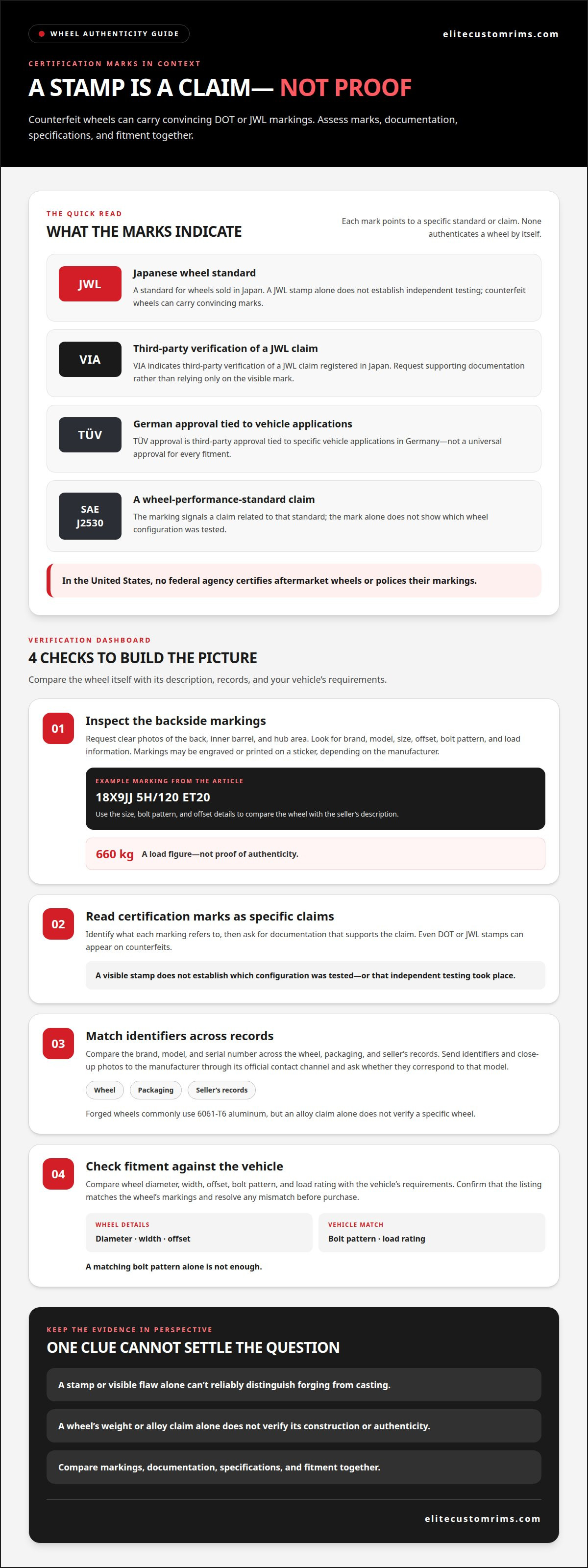
It’s sensible to look for JWL, VIA, or TÜV marks, but each needs context. JWL is a Japanese wheel standard; VIA is third-party verification of a JWL claim registered in Japan; TÜV approval is tied to specific vehicle applications in Germany.
This guide explains how to assess those marks alongside replica claims, logos, engravings, wheel details, and seller photos. You’ll learn which clues deserve closer scrutiny and why no single marking or polished product image should settle the question.
Key Takeaways
- Read certification marks in context: a stamp by itself doesn’t establish that a wheel design underwent independent testing.
- Separate replica claims from condition checks. Cracks and signs of runout are important warning clues, not proof of how a wheel was made.
- Compare logos and engravings with the wheel’s design and placement; faint marks on older or rare wheels aren’t conclusive on their own.
- Build a fuller picture from weight, specifications, close-up photos, and the seller’s claims instead of relying on one detail.
Do JWL, VIA, and TUV marks mean the wheel was actually tested?
Not by themselves: counterfeit wheels can carry convincing DOT or JWL marks without proving independent testing. A stamp or visible flaw alone can’t reliably distinguish forging from casting. Assess markings, documentation, and claimed specifications together.
-
Inspect Backside Markings
Request clear photos of the back, inner barrel, and hub area. Look for the brand, model, size, offset, bolt pattern, and load information. Markings may be engraved or printed on a sticker, depending on the manufacturer. For example, 18X9JJ 5H/120 ET20 identifies size, bolt pattern, and offset details. Compare those identifiers with the seller’s description. A 660 kg marking is a load figure, not proof of authenticity.
-
Identify Certification Marks
Read each mark as a specific claim, not a guarantee. JWL is a Japanese standard for wheels sold in Japan. VIA indicates third-party verification of a JWL claim, registered in Japan. TÜV is German third-party approval tied to specific vehicle applications. SAE J2530 signals a claim related to that wheel-performance standard; the marking alone doesn’t show which configuration was tested. In the United States, no federal agency certifies aftermarket wheels or polices their markings. Even DOT or JWL stamps can appear on counterfeits, so request supporting documentation.
- Match the brand, model, and serial number across the wheel, packaging, and seller’s records. Send those identifiers and close-up photos to the manufacturer through its official contact channel. Ask whether they correspond to that model. Forged wheels commonly use 6061-T6 aluminum, but an alloy claim alone doesn’t verify a specific wheel.
- Check fitment before buying: compare wheel diameter, width, offset, bolt pattern, and load rating with your vehicle’s requirements. Confirm that the listing matches the wheel’s markings, and resolve any mismatch before purchase. Fitment depends on the vehicle and wheel specifications together, so a matching bolt pattern alone isn’t enough.
What is a replica wheel?
A replica wheel copies another wheel’s design but may use a different manufacturing process. Assess its condition and claims separately: appearance alone can’t establish whether it’s forged.
-
Inspect for Cracks and Runout
Examine clear photos of the spokes, inner barrel, hub, and lug holes. Look for cracks, impact marks, bends, or repairs, especially around high-stress areas. Photos can reveal damage but can’t measure runout, the wheel’s deviation as it rotates. If inspecting a wheel in person, have it checked on a balancing machine. Any cracked wheel should be removed from use permanently; welding a cast wheel doesn’t restore it.
-
Examine Finish and Machining
Study close-up images of the face and inner barrel. Look for uneven coating, rough edges, inconsistent machining, or visible surface defects. Compare wheels from the same set for differences in finish or detail. These clues can indicate poor workmanship, but they don’t prove that a wheel is forged or counterfeit. A polished surface can conceal repairs, so inspect both sides and request additional angles if important areas aren’t visible.
- Separate the replica claim from the safety assessment. Replicas often use casting and may weigh more than authentic forged wheels. Greater weight doesn’t prove a defect, but construction claims should match the evidence. Check load information and vehicle fitment, and consider how cracks, vibration, or failure under load could affect use.
- Treat state inspection as a separate check. Passing inspection can’t establish whether a wheel was forged, authenticate its brand, or verify its manufacturing history. In the United States, owning or driving on replica wheels isn’t itself illegal. Selling wheels that copy protected designs can raise trademark or design-patent issues.
- Reduce purchase risk before paying. Read the seller’s return terms and save a copy of the listing, product description, and messages. Use a payment method that provides a transaction record and dispute process, rather than an irreversible transfer. These steps can help document a problem but don’t establish a wheel’s authenticity. Ask for written clarification of the replica claim before checkout.
Assessing logo and engraving quality
- Locate the markings before judging their quality. Photograph the wheel’s rear, including the hub, inner barrel, and area beside the valve stem. Porsche part numbers and logos may appear on the wheel’s back. Raised rim-width and offset markings may sit beside the valve-stem hole. Record each visible identifier and where it appears so you can compare them.
- Compare the logo with the same wheel design. Check letter shapes, spacing, orientation, and placement against clear reference images. Look for obvious mismatches, such as a different wordmark or a logo in an unexpected location. A clean logo can still be copied, so treat appearance as one clue, not proof of authenticity.
- Inspect engraving edges in close-up photos. Look for legible characters, consistent depth, and clean borders around stamped or raised details. Blurred images can hide defects, while glare can make shallow marks look deep. Ask for an unfiltered close-up if the seller’s image doesn’t clearly show the engraving.
- Compare markings across wheels in the same set. Check whether the part number, logo placement, and raised details are consistent. Manufacturing or design differences can occur, so one variation doesn’t establish counterfeiting. Faint or partly faded marks on older or rare used wheels don’t necessarily mean they’re fake.
- Read the numbers as well as the logo. A genuine Porsche wheel example has raised rim-width and offset markings beside the valve-stem hole, including a 7.5 rim width and 52 offset. Compare these identifiers with the claimed wheel specification. Don’t accept a familiar logo as a substitute for matching details.
- Assess all the clues together. A convincing logo, tidy engraving, or matching number alone can’t settle authenticity. Compare placement, character shapes, and identifiers across the wheel photos. If a seller shows only the front face, the rear markings remain unseen. Treat missing views as an incomplete visual assessment, not automatic proof of a fake.
Ways to identify fake forged wheels
To learn how to spot fake forged wheels online, assess construction, weight, price, and listing evidence together. No single visual clue proves a wheel is forged.
- Compare the stated construction with the wheel’s details. Forged wheels begin as aluminum billets squeezed under thousands of tons of pressure. Flow-formed wheels use a different process, while cast wheels are made by pouring material into a mold. A claimed forged 19x10 wheel weighing well over 30 pounds conflicts with the expected weight profile.
-
Assess Price Signals
Compare the asking price with the expected price for that specific brand, model, and wheel configuration. A price 30-50% lower than expected is a red flag, especially for new name-brand wheels at off-brand prices. There’s no single typical price range for genuine forged wheels; brand, size, design, and specifications affect the price. Treat a steep discount as a reason to scrutinize the remaining evidence, not as proof by itself.
-
Inspect Photos and Listing Details
Examine close-up images of the markings, inner barrel, and hub. Check whether the listing identifies a model and gives matching size, offset, and bolt-pattern details. Compare those details across the description and photos. Watch for cropped views that conceal key areas, inconsistent specifications, or generic images that don’t show the actual wheels. Request clear photos of the specific set before deciding.
- Weigh construction claims against risk. Forged wheels commonly use 6061-T6 aluminum, but an alloy description doesn’t authenticate a particular wheel. Replicas may use cheaper casting and can be heavier than authentic forged wheels. Counterfeit or poorly made wheels may crack under stress, vibrate, or fail under load. Any crack means the wheel should be permanently removed from the car; welding a cast wheel doesn’t restore it.
- Use these checks to understand how to spot fake forged wheels online, then weigh the evidence as a whole. A low price, heavy weight, vague listing, or unclear markings alone doesn’t establish counterfeiting. Several mismatches deserve serious attention. For vehicle-specific options, explore wheels matched to your vehicle and compare the specifications with your fitment needs.
Elite Custom Rims
Elite Custom Rims helps drivers narrow their wheel choices by vehicle make and fitment needs. Its selection includes Audi Wheels, Chevy Wheels, Mercedes Wheels, and Porsche Wheels, with dedicated fitment options to help identify a suitable match.
Use these checks to assess a seller’s forged-wheel claims, markings, and photos. Manufacturer records are the way to authenticate a wheel’s origin; selecting wheels and confirming fitment are separate decisions. Consider both before buying, especially if the listing’s specifications or branding raise concerns.
If you’re choosing wheels for your vehicle, contact Elite Custom Rims to discuss your options.
Make Your Next Wheel Choice With Confidence
Use your research to define what matters most for your vehicle: the look you want, the fitment it needs, and the evidence you expect from a seller. Learning how to spot fake forged wheels online can sharpen your questions. Your next decision is also about choosing wheels that suit your vehicle and priorities.
Elite Custom Rims can help you explore wheel options for your vehicle and consider fitment as part of your choice. Share your year, make, model, and trim with a specialist for fitment confirmation, then move forward with a clearer sense of what you want.
Contact Elite Custom Rims to discuss your wheel options. A thoughtful choice can move your build forward with confidence.
Frequently Asked Questions
How do you spot a fake forged wheel?
Look for inconsistencies between the wheel’s identity and the seller’s claims. Match the model name and identifying numbers to manufacturer information, then compare those details across every wheel in the set. Ask for photos of the actual items, not just catalog images. A mismatch deserves investigation, but visual inspection alone can’t authenticate a wheel’s manufacturing history.
How can you verify forged wheels are genuine when buying from an online marketplace?
Use the wheel’s brand, model, and serial number to request an identity check from the manufacturer through its official support channel. Make sure photos show the exact wheels offered, with readable identifying details. Save the listing and seller communications so you can refer to the product claims. Marketplace listing text alone isn’t proof of origin.
What documents, test reports, and certifications should legitimate forged wheels include?
There isn’t one set of documents that proves every forged wheel is genuine. Ask for records identifying the exact brand, model, and configuration, along with manufacturer confirmation that the serial or identifying number matches. If the seller provides a test report, check that it names the same wheel and application. JWL, VIA, or TÜV marks describe specific claims, not automatic proof of authenticity.
What markings and casting defects distinguish forged wheels from cast wheels?
No marking or visible defect reliably distinguishes forged wheels from cast wheels. Compare the brand, model, specifications, and markings with supporting documentation. Cracks and other damage are warnings about condition, not proof of how the wheel was made.
What is the typical price range for genuine forged wheels, and what prices suggest a counterfeit?
There is no single typical price range for genuine forged wheels; price varies by brand, size, design, and specifications. A price 30-50% below what is expected for that specific wheel is a red flag, not proof of a counterfeit.