
Directional wheels can bring a little extra upkeep, but they aren’t automatically a bad idea for daily driving. The main trade-off usually comes from directional tires, which have fewer rotation options and can make managing tread wear less flexible. Spoke design and tire tread direction are related choices, but they create different limits.
It’s worth weighing the look against everyday practicality. This guide explains directional spokes, mirrored left- and right-side designs, and how directional tires affect rotation, tread wear, and cost. It also compares non-directional wheels so you can choose a setup that suits your vehicle and driving routine.
Key Takeaways
- Separate wheel-spoke direction from tire-tread direction to understand what each design actually changes.
- Learn why directional wheel sets use mirrored left- and right-side designs, and what that means when replacing a wheel.
- Factor in your wheel and tire setup when considering rotation options for daily driving.
- See how directional tire rotation limits can affect wear management and the overall cost of ownership.
Why Do Some Wheels Use Directional Spokes?
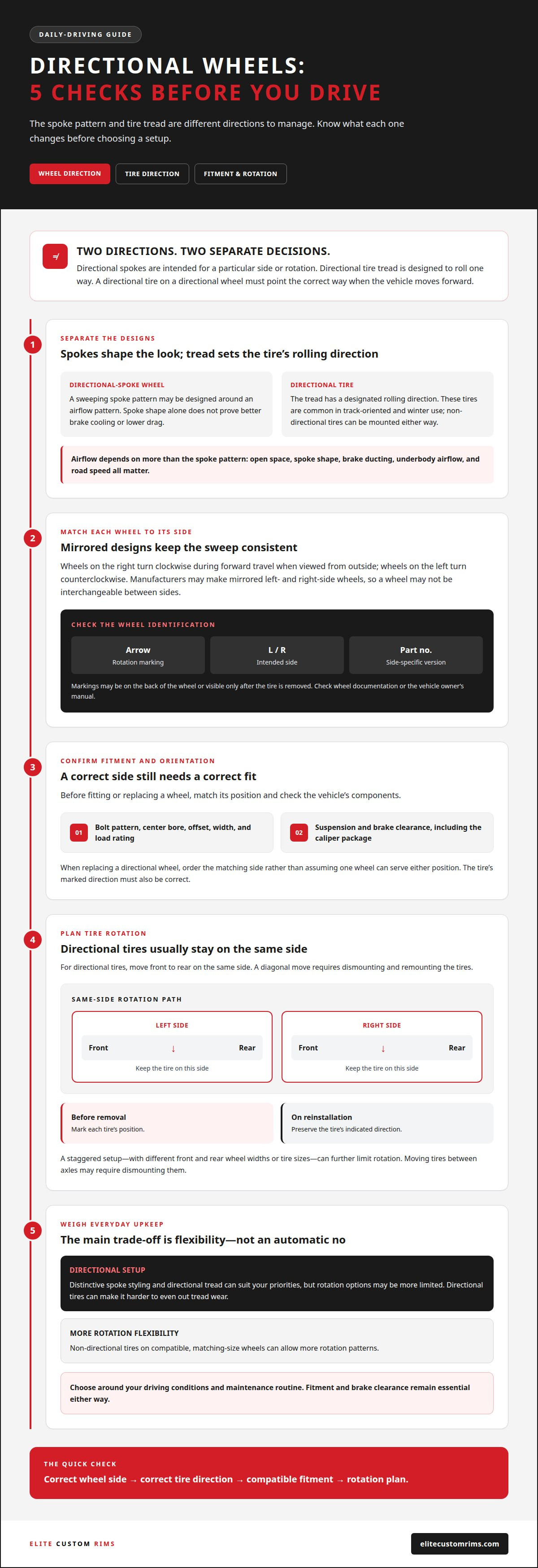
Directional spokes create a visual sweep as the wheel turns. Designers may also shape spokes to influence airflow, but the pattern alone doesn’t prove better brake cooling or lower drag. Airflow depends on the open space between spokes, their shape, brake ducting, underbody airflow, and road speed.
Keep wheel and tire designs distinct. Directional tires have tread intended to roll in one direction. They’re common on track-oriented and winter tires, where the tread design can support grip and channel water. Non-directional tires, often found on all-season models, can be mounted either way. The right choice depends on driving conditions and how you plan to manage tire wear.
So, are directional wheels a bad idea for daily driving? Not inherently. The key is understanding the tire’s rotation limits and matching each directional wheel to its intended side. A directional tire on a directional wheel must point the correct way when the vehicle moves forward.
| Option | Common use | Rotation consideration | Design note |
|---|---|---|---|
| Directional tire | Track-oriented or winter driving | Usually stays on the same side | Tread has a designated rolling direction |
| Non-directional tire | Common all-season use | Can allow more rotation patterns | Tread can face either direction |
| Directional-spoke wheel | Style-led wheel design | May need a matching left- or right-side wheel | Spoke shape alone doesn’t establish performance benefits |
Rotate directional tires from front to rear on the same side. Don’t move them diagonally unless they’re removed and remounted. Mark each tire’s position before removal, and preserve its indicated direction when reinstalling it.
A full-size spare can work if its fitment and directional orientation suit the vehicle and wheel position. If its tread would face the wrong way, it won’t maintain the tire’s intended direction. Directional spokes aren’t a standalone U.S. legal or inspection criterion; applicable requirements and the vehicle’s condition still matter.
Mirrored left- and right-side wheel designs
A directional wheel’s spokes sweep toward the rear or front as the vehicle moves. Manufacturers typically make mirrored left- and right-side versions so the pattern looks consistent on both sides. The wheels aren’t necessarily interchangeable: a design that sweeps correctly on the driver’s side may look reversed on the passenger side.
The reason is how each side rotates. Viewed from outside the vehicle, wheels on the right turn clockwise during forward travel, while wheels on the left turn counterclockwise. Mirrored spoke shapes account for this difference. Some directional wheel sets use an arrow, an L or R stamp, or separate part numbers to identify the intended side or rotation.
If a directional wheel is installed on the wrong side, its spokes look reversed and the wheel no longer follows the airflow pattern its designer intended. That doesn’t establish a specific performance loss, but it does mean the wheel isn’t oriented as designed. Tire tread direction matters separately: a directional tire must also roll in its marked direction.
Before fitting or replacing a wheel, identify its side and rotation markings. Markings may be on the back of the wheel or visible only after the tire is removed. Manufacturers use different marking practices, so the wheel documentation or vehicle owner’s manual can clarify how a particular set is labeled.
Keep these distinctions clear:
- Wheel direction: The spoke pattern is intended for a specific side or rotation.
- Tire direction: The tread has a designated rolling direction that must face forward correctly.
- Fitment: The correct side still needs to match the vehicle’s wheel position and components.
When replacing a directional wheel, order the matching side rather than assuming one wheel can serve either position. A correctly oriented directional tire and its matching wheel preserve the intended tread and spoke directions.
Practical trade-offs for daily driving
For a daily driver, wheel direction affects upkeep more than the commute itself. A directional spoke pattern creates a distinctive look, but may require separate left- and right-side wheels. This matters when replacing a damaged wheel: the replacement must match the correct side and clear the vehicle’s brakes and suspension.
Tire layout also shapes routine maintenance. Directional tires can move from front to rear on the same side, but crossing them diagonally requires dismounting and remounting. A staggered setup, with different front and rear wheel widths or tire sizes, can further limit rotation. Moving tires between axles may then require dismounting them.
Performance depends on the full setup, not the spoke pattern alone. Directional tread designs can provide grip on dry pavement and channel water in wet conditions, while directional wheels may be designed around a particular airflow pattern. The result depends on open spoke area, spoke cross-section, brake ducting, underbody airflow, and road speed. A sweeping spoke shape alone doesn’t establish a handling, cooling, or drag advantage.
- Fit: Match bolt pattern, center bore, offset, width, and load rating.
- Clearance: Account for suspension and brake components, including the specific caliper package.
- Rotation: Consider tire direction and whether front-to-rear swaps are possible.
These checks matter for any wheel choice, but directional and staggered combinations make planning especially useful. For example, directional tires on a staggered setup may have fewer practical rotation options than non-directional tires on matching-size wheels.
Choose based on your priorities. If wet-weather tread behavior or a particular look matters most, directional options may suit your routine. If straightforward tire rotation is a priority, non-directional tires on compatible, matching-size wheels can offer more flexibility. Fitment and brake clearance remain essential either way.
Directional tire wear and cost
Directional tires can make it harder to even out tread wear because rotation is generally limited to the same side. If a front tire wears faster than its rear counterpart, moving tires across the car isn’t a simple swap. The tread must keep its marked rolling direction, so cross-car rotation requires dismounting and remounting the tires.
That restriction can add labor and complicate wear management. Non-directional tires can use a diagonal X rotation pattern, allowing positions to change across the vehicle. Directional tires generally move from front to rear on the same side. A staggered setup with different front and rear sizes can restrict rotation further, leaving fewer ways to redistribute tread wear.
Tire compound also affects long-term costs. Summer directional tires often use softer rubber compounds, which can mean a higher purchase cost and faster wear than tires with less aggressive compounds. The directional tread pattern alone doesn’t prove a tire will wear quickly; driving conditions, vehicle setup, and maintenance matter too.
- Directional tires: Preserve the marked rolling direction and plan rotations on the same side.
- Non-directional tires: A diagonal X pattern can offer more rotation flexibility.
- Staggered sizes: Different front and rear dimensions may prevent moving tires between axles.
To manage wear, follow the tire maker’s rotation guidance and keep each tire facing the correct direction after service. Track its position, then inspect tread wear patterns during routine maintenance. If a tire wears unevenly, address the cause instead of relying on rotation alone. For summer directional tires, weigh their driving benefits against their compound, rotation limits, and replacement frequency.
The takeaway: directional tires aren’t automatically the costlier choice, but limited rotation and softer summer compounds can raise ownership costs. Explore wheel options for your vehicle as you plan a setup that fits your driving priorities.
Elite Custom Rims
Elite Custom Rims helps drivers choose wheels suited to their vehicles and priorities. If directional styling appeals to you, consider practical details such as wheel fitment, brake clearance, and your expected tire rotation pattern. These factors matter whether you’re considering Audi Wheels, Chevy/GMC Wheels, Mercedes Wheels, or Porsche Wheels.
Use this guide to decide what matters most: directional appearance, tire orientation, or easier wear management. Then choose a wheel setup that fits your vehicle rather than assuming spoke direction alone determines daily performance.
For help exploring wheel options for your vehicle, contact Elite Custom Rims.
Choose the setup that fits your routine
Whether directional wheels are a bad idea for daily driving depends on what you value in your setup. Let your priorities guide the choice: the look you want, the tire characteristics you need, and how much flexibility you prefer for managing wear. A clear decision can help you choose wheels suited to everyday use, not just how they look in the driveway.
When you’re ready to explore compatible options, Elite Custom Rims offers Audi Wheels, Chevy/GMC Wheels, and Mercedes Wheels. Consider your vehicle and preferred style, then contact a wheel specialist to confirm fitment before ordering.
Contact Elite Custom Rims about wheel options and move toward a setup that suits your daily drive.
Frequently Asked Questions
What are directional wheels and how do they differ from non-directional wheels?
Directional wheels have spokes designed to sweep in a particular direction as the vehicle moves. Non-directional wheels use a pattern that looks consistent whichever way the wheel rotates. For example, a directional set may need distinct left- and right-side versions. Wheel direction describes the spoke design; tire direction refers to the tread’s intended rolling direction.
Are directional wheels safe and practical for daily driving?
Directional wheels can be used for daily driving when correctly fitted and oriented. The wheel must suit the vehicle’s bolt pattern, offset, width, load rating, and brake and suspension clearance. The tire must also face its designated rolling direction. For example, a correctly sized wheel installed on the wrong side can reverse the intended spoke appearance and airflow pattern.
How do directional wheels affect tire rotation options and tire wear?
Directional wheels don’t determine tire wear by themselves; tread direction and vehicle setup shape rotation options. A directional tire can move between front and rear positions on its side, while diagonal rotation requires remounting. For example, a staggered vehicle with different front and rear sizes may have fewer rotation options, making tread wear harder to redistribute.
What are the pros and cons of directional wheels for everyday use?
The main advantage is the distinctive swept-spoke appearance, and some designs aim to manage airflow. Trade-offs include matching wheels to their intended sides and planning replacements carefully. For example, replacing a damaged wheel may require the correct left- or right-side version. The spoke pattern alone doesn’t establish better cooling, handling, or lower drag.
Do directional wheels affect fuel economy, handling, or road noise?
A wheel’s airflow can influence aerodynamic drag, but the effect depends on its open area, spoke shape, vehicle airflow, and speed. Spoke direction alone doesn’t show whether fuel economy or handling will improve. Road noise also depends on factors beyond wheel direction, including tire choice and road surface, so the design itself can’t predict cabin noise.
Are directional wheels harder or more expensive to maintain and replace?
Routine wheel care isn’t inherently different because spokes are directional, but replacement requires attention to the correct side and fitment. Tire costs depend on the tire, not simply the wheel design. For example, summer directional tires often use softer compounds, which can cost more and wear faster. Limited rotation options can also make even tread wear harder to manage.